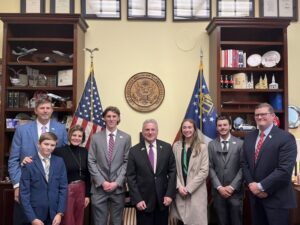
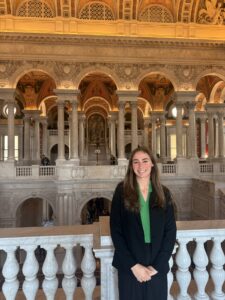
 Early this semester, I had the honor of representing the University of Georgia through my selection to attend the Forest Landowners Association (FLA) Forest Policy Fly-In in Washington, D.C. This experience was both professionally formative and personally meaningful, as it allowed me to see firsthand how forest policy is shaped at the federal level and how it directly impacts landowners throughout the country.
As an MFR student within the Harley Langdale Center for Forest Business, much of our coursework focuses on analyzing forest markets, management decisions, and investment performance. In Washington, I was able to connect those classroom concepts directly to federal policy discussions and observe how legislation influences financial outcomes for private landowners and forest investors. Throughout the fly-in, major talking points for FLA centered on the European Union Deforestation Regulation (EUDR) and the growing importance of tree residual utilization markets. The landowners expressed concern about how EUDR compliance requirements could create significant documentation burdens, disrupt export markets, and unintentionally disadvantage U.S. private forest owners despite the country’s strong record of sustainable forest management. The discussions emphasized the importance of ensuring that U.S. forestry practices are accurately represented in international trade policy and that American landowners are not subject to duplicative or impractical reporting standards that could reduce competitiveness in global markets.
In addition to trade policy, conversations focused on expanding markets for tree residuals, such as tops, limbs, and other lower-value biomass material, particularly in emerging sectors such as sustainable aviation fuel (SAF). With airlines and energy producers increasingly exploring forest biomass as a renewable fuel feedstock, there is potential in creating new revenue streams for private landowners. From a forest business perspective, these markets represent an opportunity to improve stand-level economics by monetizing material that historically had limited commercial value. FLA advocated for policies that support innovation in bioenergy, maintain strong domestic wood markets, and ensure regulatory frameworks encourage the development of these value-added uses.
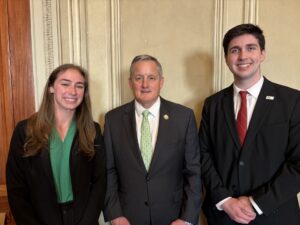
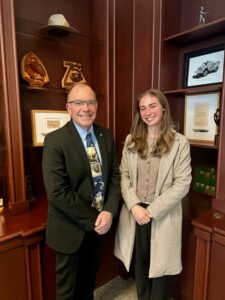
During the fly-in, we met directly with members of Congress, including Representative Buddy Carter, Senator Jon Ossoff, and Representative Bruce Westerman of Arkansas. The meeting with members provided broad, strategic conversations about how forestry contributes to rural economies, supports domestic supply chains, and sustains working landscapes. These discussions focused on constituent impact, job creation, and the long-term importance of maintaining viable private forest ownership across the South and nationwide. One particularly memorable experience was meeting with Representative Bruce Westerman, who is a professional forester by training. His background in forestry brought a unique perspective to the discussion, and he generously provided our group with a private evening tour of the U.S. Capitol. When walking through the Capitol after hours while discussing natural resource policy was a powerful reminder that decisions made within those historic chambers directly influence multi-generational investments in working forests across the country.
In addition to member meetings, we also met with congressional staffers from several offices. These conversations were more technical and policy-focused. The staff members asked detailed questions about specific legislative language, program funding levels, regulatory implementation, and how EUDR compliance or bioenergy incentives would affect landowners’ bottom lines. The distinction between meetings was clear: members focused on overarching priorities and political direction, while staff engaged deeply with policy mechanics and implementation details. As a forest business student, I found these discussions particularly compelling because they required translating forest economics into tangible examples of how regulations, tax treatment, or emerging markets influence harvest timing, land valuation, and long-term investment returns. We also attended meetings with federal agencies, including the Environmental Protection Agency (EPA) and the United States Forest Service (USFS), where discussions centered on regulatory implementation and ensuring that environmental policies recognize the role of actively managed private forests. By observing landowners articulate how federal decisions affect multi-generational assets reinforced how interconnected forest economics and public policy truly are.
Liam Reid, a fellow University of Georgia student studying forestry who attended alongside me, shared, “The most educational part of Forest Policy Institute (FPI) was seeing how the Forest Landowners Association (FLA) advocates for the needs of private forest landowners. Watching the landowners who make up FLA rally around shared goals highlighted the strength of the forestry community. It was also intriguing to see how open congressional offices were to meeting with us and giving their full attention to the concerns facing the forestry industry.”
By representing the University of Georgia, I felt it was important to demonstrate how the Harley Langdale Center for Forest Business prepares students to engage in these policy conversations. Forestry is inherently a long-rotation investment, and policy decisions made today can shape management strategies, market opportunities, and land values decades into the future.
Beyond policy discussions, the fly-in provided invaluable networking opportunities. Engaging with landowners, industry professionals, and policy advocates broadened my understanding of diverse perspectives across the forest sector. Attending the Forest Policy Fly-In strengthened my interest in the intersection of forest economics, investment, and public policy.
This experience was made possible by donors to the Forest Landowners Foundation, and I am extremely grateful. It reinforced that successful forest management extends beyond silviculture and markets — it depends equally on informed, balanced policy decisions that recognize the importance of private working forests.