


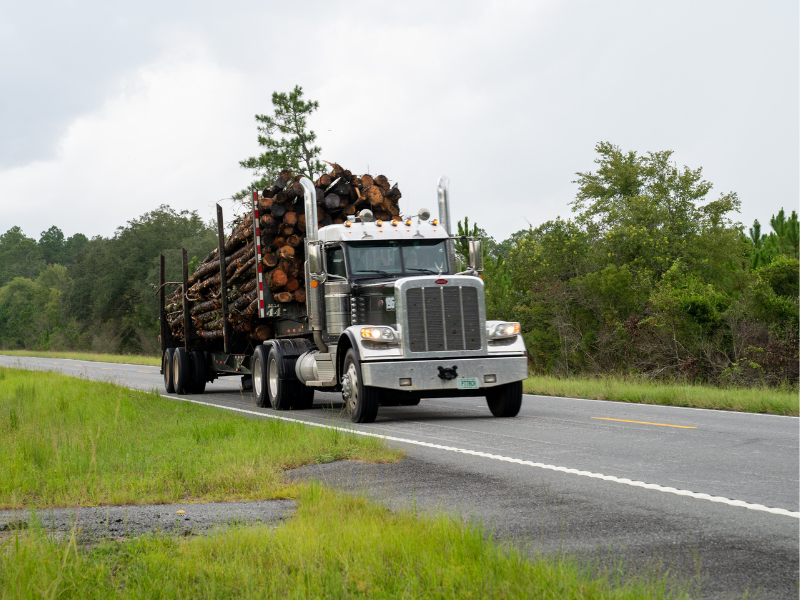
A recent 2024 study by Joe Conrad and Chad Bolding analyzed the impact of a temporary increase in Georgia log truck haul weight permits, from to 84,000 lbs to 95,000 lbs, issued during the COVID-19 pandemic. The result? Heavier log trucks did not lead to more crashes or more severe incidents.

11.14.2024
Student Spotlight: Thomas Black
After Thomas Black graduates with his MFR in Forest Business in December 2024, he will head to Atlanta, GA to work as an Investment Analysist with Weyerhaeuser. Thomas interned with three forest and timber management companies while enrolled in the Center for Forest Business, and supported Dr. Bolding and Dr. Conrad on logging and mill weights research.
10.28.2024
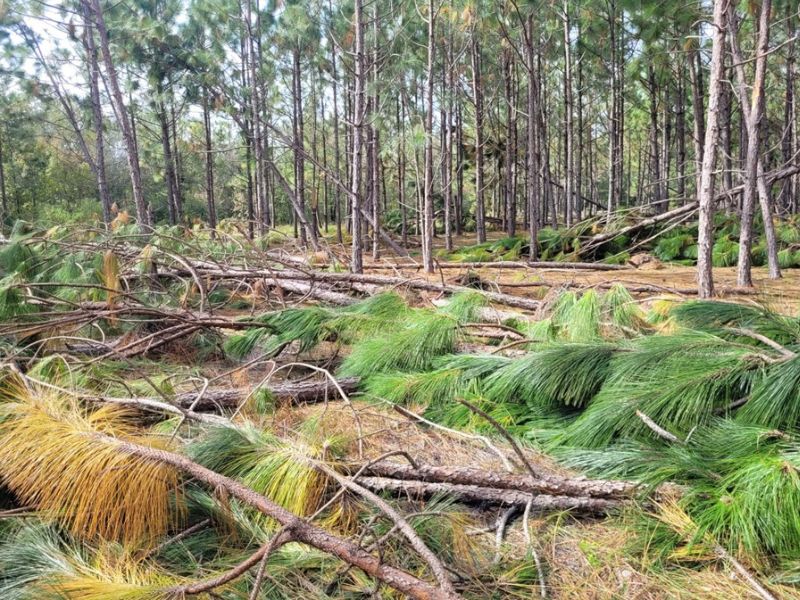
After Hurricane Helene: How to Claim Timber Casualty Losses and Defer Taxes on Salvage Timber Sales
As of October 21st, 2024, 91 Georgia counties have been declared federal disaster areas (DR-4830-GA) eligible for individual and/or public assistance.
08.13.2024
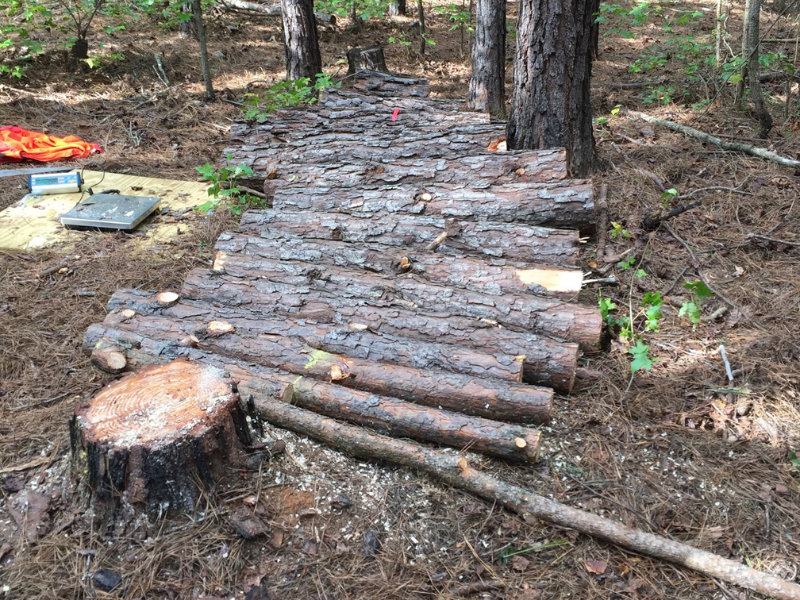
Rethinking Green Density: What New Research Means for Southern Pine Forestry
In the southeastern United States, loblolly and slash pines are the economic backbone of the forest industry. Many mills and landowners use weight-based systems for their loblolly and slash timber transactions. However, converting between weight and volume requires accurate green density values, but how accurately are we estimating their green weight and volume?

07.19.2024
Langdale Center for Forest Business names new director
The Harley Langdale Jr. Center for Forest Business at the University of Georgia welcomes industry expert Erin Lincoln on August 1.
07.01.2024
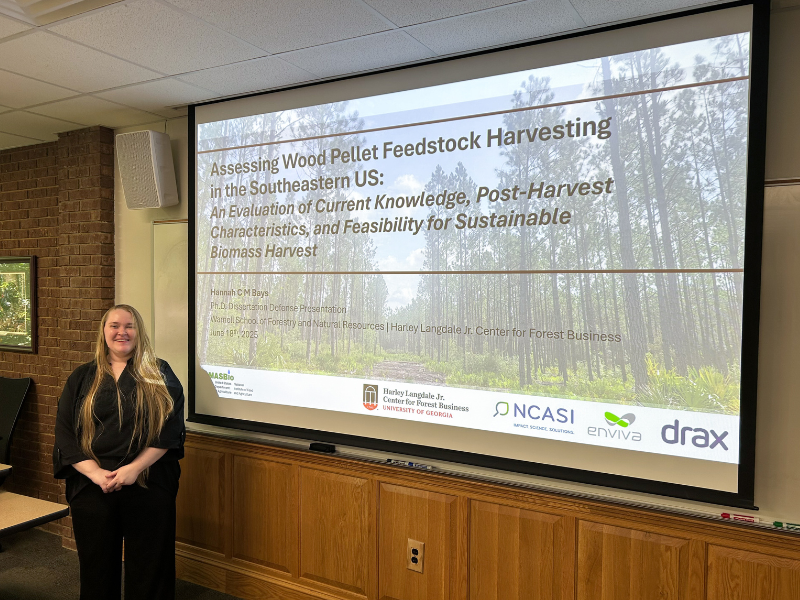
Assessing the Sustainability of Forest Biomass Harvesting in the Southeastern U.S.: A Review
As European renewable energy goals drive up demand for wood pellets, the southeastern U.S. has become a key supplier. But are our forests ready? A recent UGA research paper in Biomass and Bioenergy offers a comprehensive review of the environmental impacts of forest biomass harvesting, especially for wood pellet production.
05.25.2024
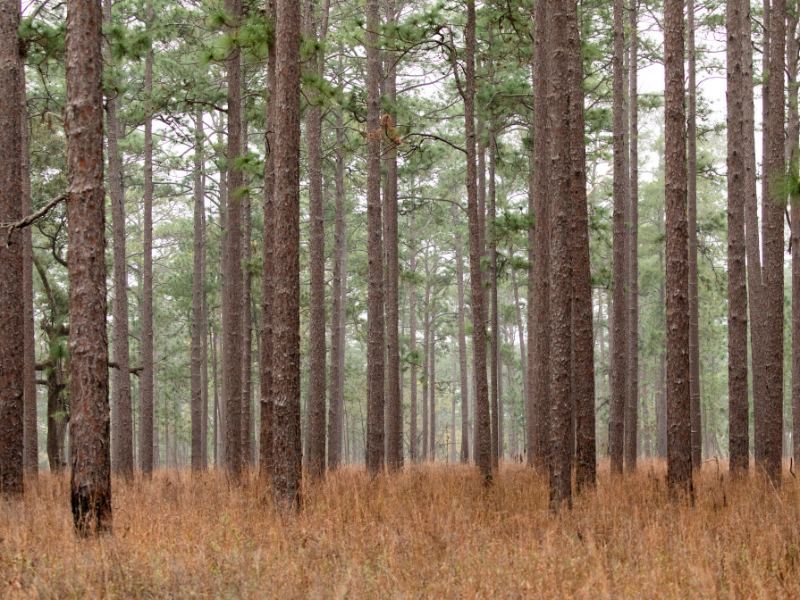
The Hidden Cost of Ignoring Terminal Value in Forest Planning
In timberland valuation and harvest planning, one often-overlooked factor can make or break your bottom line: terminal value. A new study by Silva et al. (2024) shows that failing to account for the value of unharvested timber at the end of a planning horizon can lead to significant undervaluation.
03.21.2024
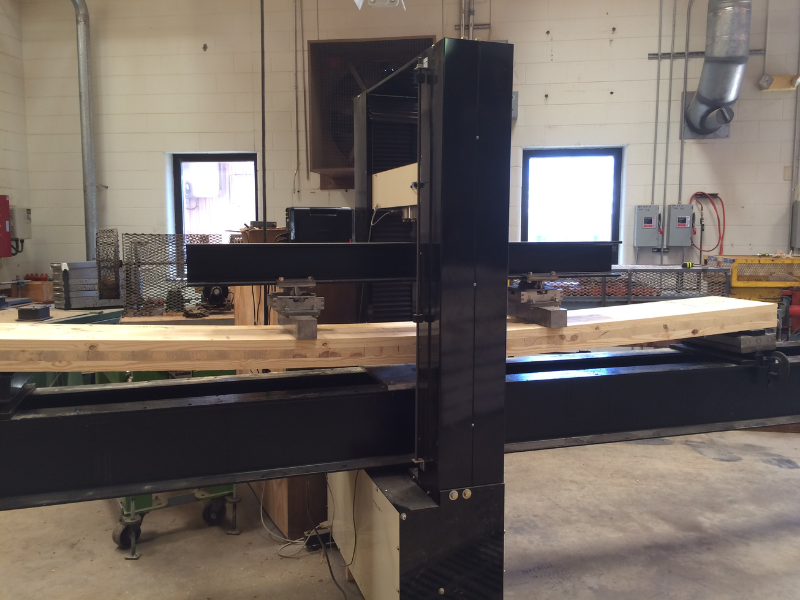
Enhancing Wood Property Prediction with Machine Learning and Synthetic NIR Data
As mass timber construction continues to rise, artificial intelligence tools like machine learning can help ensure the right wood goes in the right place—making buildings safer, more sustainable, and more cost-effective. A 2024 study addresses this challenge by using artificial intelligence to generate synthetic data to augment and improve existing datasets and results.
03.08.2024
Georgia Sawtimber Prices Held Steady in Q4 2023
Pine sawtimber and chip-n-saw stumpage prices in Georgia stabilized during the fourth quarter of 2023 following three consecutive quarters of decline. However, pine pulpwood stumpage prices continued to fall during the quarter.
03.05.2024
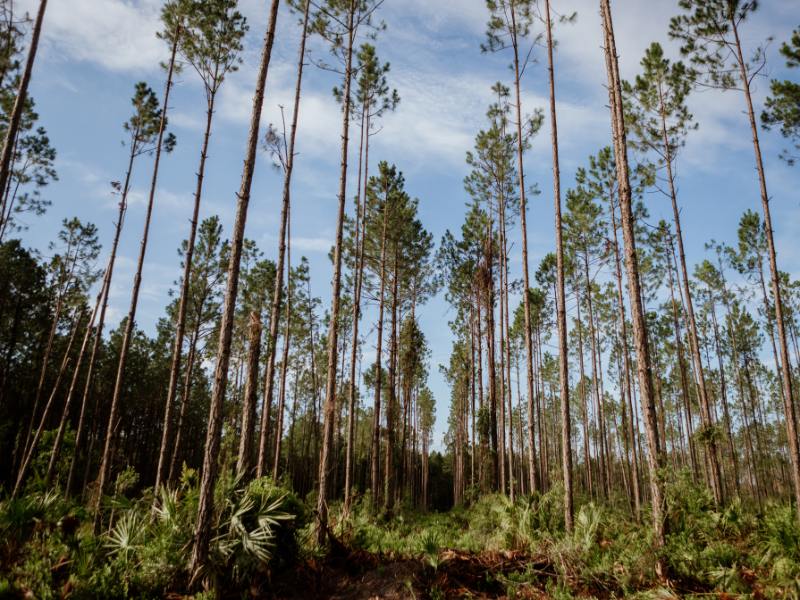
Improving thinned loblolly, longleaf and slash pine stand growth with a herbicide or a fertilizer treatment – making the right choice
Thinned loblolly, longleaf and slash pine stands often respond to a woody competition control treatment and/or a fertilizer treatment. Deciding which treatment may be the best choice depends on several factors.

